
Bacteriostatic Water for Sale: Australian Lab Guide

You're comparing two listings for bacteriostatic water for sale and trying to work out why the prices, vial formats and paperwork differ. The cheap listing may look like a straightforward saving, but without clear product identity, intended-use labelling and batch records, you can't make a sound procurement decision.
For an Australian research team, the right question isn't how much a vial costs. It's whether the product's documentation, preservative details, traceability and supply arrangements fit your workflow. Treat it as a controlled laboratory consumable, not ordinary purified water.
Table of Contents
- Why Bacteriostatic Water Is a Procurement Decision, Not Just a Commodity
- What Bacteriostatic Water Actually Is in a Research Context
- Bacteriostatic Water Compared With Sterile Water for Injection
- Receiving and Handling Bacteriostatic Water in an Australian Lab
- A Worked Example of a Reconstitution Calculation
- Procurement Risk and Supply Resilience for Australian Research
- A Buyer's Checklist and Common Questions for Australian Labs
Why Bacteriostatic Water Is a Procurement Decision, Not Just a Commodity
A researcher comparing suppliers needs to know what sits behind each listing. Is the product labelled for research use? Does its documentation identify the manufacturer, formulation and batch? Can the supplier provide a certificate of analysis, and will the delivered pack have suitable remaining shelf life?
Those details matter more than a low per-millilitre price. Australian safety guidance treats injectable medicines as a high-risk area: the Australian Commission on Safety and Quality in Health Care reports that approximately 25% of medication incidents in acute-care settings involve injectable medicines, while nearly 60% of medication errors resulting in serious harm or death involve injectables. Those figures aren't evidence that bacteriostatic water causes harm. They're a reason to maintain careful identification, labelling and segregation for injectable-related supplies, even when a product is intended only for research. (The Commission's national labelling standard)
Procurement rule: If a supplier can't clearly identify the product and provide batch-specific documentation, don't buy it for a traceable research workflow.
Australian-owned and operated suppliers can offer convenient domestic processing, but local dispatch alone doesn't establish product quality or supply resilience. Use a consistent supplier assessment process, such as this Australian research peptide supplier guide, and compare documentation before comparing prices.
What Bacteriostatic Water Actually Is in a Research Context
For procurement purposes, treat bacteriostatic water as a sterile, preservative-containing multidose diluent, not as interchangeable with ordinary distilled or purified water. Its intended use, stated composition and preservative identity should appear in product documentation. Don't assume the word “bacteriostatic” tells you the preservative or its concentration.
“Multidose” describes a presentation intended for repeated access, subject to its label, manufacturer's instructions and your laboratory's approved procedures. It doesn't mean the contents are protected indefinitely after opening. A product's sterile status, preservative content and intended-use claims are separate details, so verify each one rather than treating them as a single quality mark.
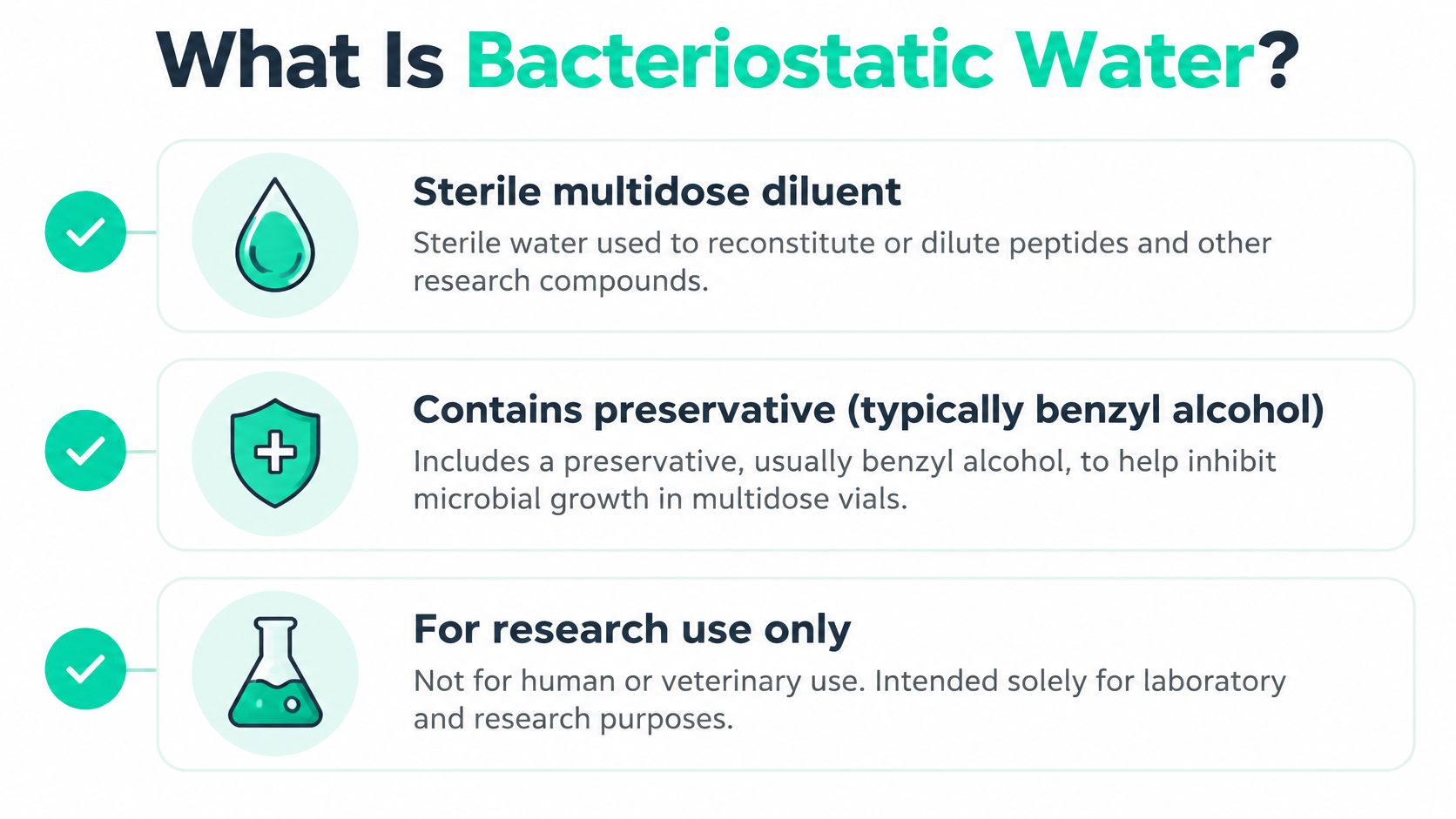
On receipt, check the label against the supplier's specification. Record the product identity, preservative, lot number and expiry, then inspect the vial for damage, cloudiness or visible particles. Keep opening date, operator and storage conditions in your records; those details help your team review any issue and link work back to a particular batch.
Australian buyers also need to distinguish product identity from legal status. The Australian Poisons Standard provides a national scheduling framework, but a product's name alone doesn't establish how it may be supplied or used. Check the current requirements and the actual product presentation, and keep research materials separate from anything intended for clinical administration.
Bacteriostatic Water Compared With Sterile Water for Injection
These products aren't automatic substitutes. Choose based on the study's requirements, the diluent's documented intended use and whether any preservative could affect the experiment or analytical method.
| Attribute | Bacteriostatic water | Sterile water for injection |
|---|---|---|
| Preservative | Contains a preservative; verify its identity and concentration on the label or documentation. | Preservative-free presentation, as specified by the product documentation. |
| Intended use | A multidose diluent when the product label and research method support it. | A sterile vehicle for reconstitution or dilution where the product information specifies it. |
| Presentation | May be supplied in a multidose vial. | Presentation and use restrictions depend on the specific product. |
| Australian supply status | Confirm the product's classification and lawful supply pathway. | Check the product listing and access requirements; don't infer suitability from its name. |
| Documentation to check | Intended-use statement, composition, lot, expiry and relevant quality documentation. | Intended use, sterility information, product-specific instructions, lot and expiry. |
Healthdirect describes Water for Injections as a sterile vehicle for reconstituting or diluting injectable medicines and advises consumers to check access requirements with a pharmacist. That description doesn't make it interchangeable with a preservative-containing research diluent, or suitable for every experiment. (Healthdirect's Water for Injections information)
For research procurement, decide whether the preservative is compatible with the study before ordering. If the product documentation or method doesn't resolve that question, ask the supplier for the relevant specifications and consult the laboratory's technical lead. Don't choose a diluent based on a generic online comparison or a product name alone.
Receiving and Handling Bacteriostatic Water in an Australian Lab
A supplier's paperwork is only useful if the laboratory connects it to what arrived. Start by matching the container's intended use, sterility statement, lot, expiry and preservative details to the order and specification. Reject or quarantine a vial with a damaged seal, unexpected appearance or unclear labelling.
NSW Health guidance calls for aseptic technique when accessing vials. It says each entry into a multidose vial must use a new, unused sterile needle and syringe, even when the vial is dedicated to one patient. The same contamination-control principles support a designated clean preparation area, away from sinks and other potential water sources. (NSW Health's aseptic technique guidance)
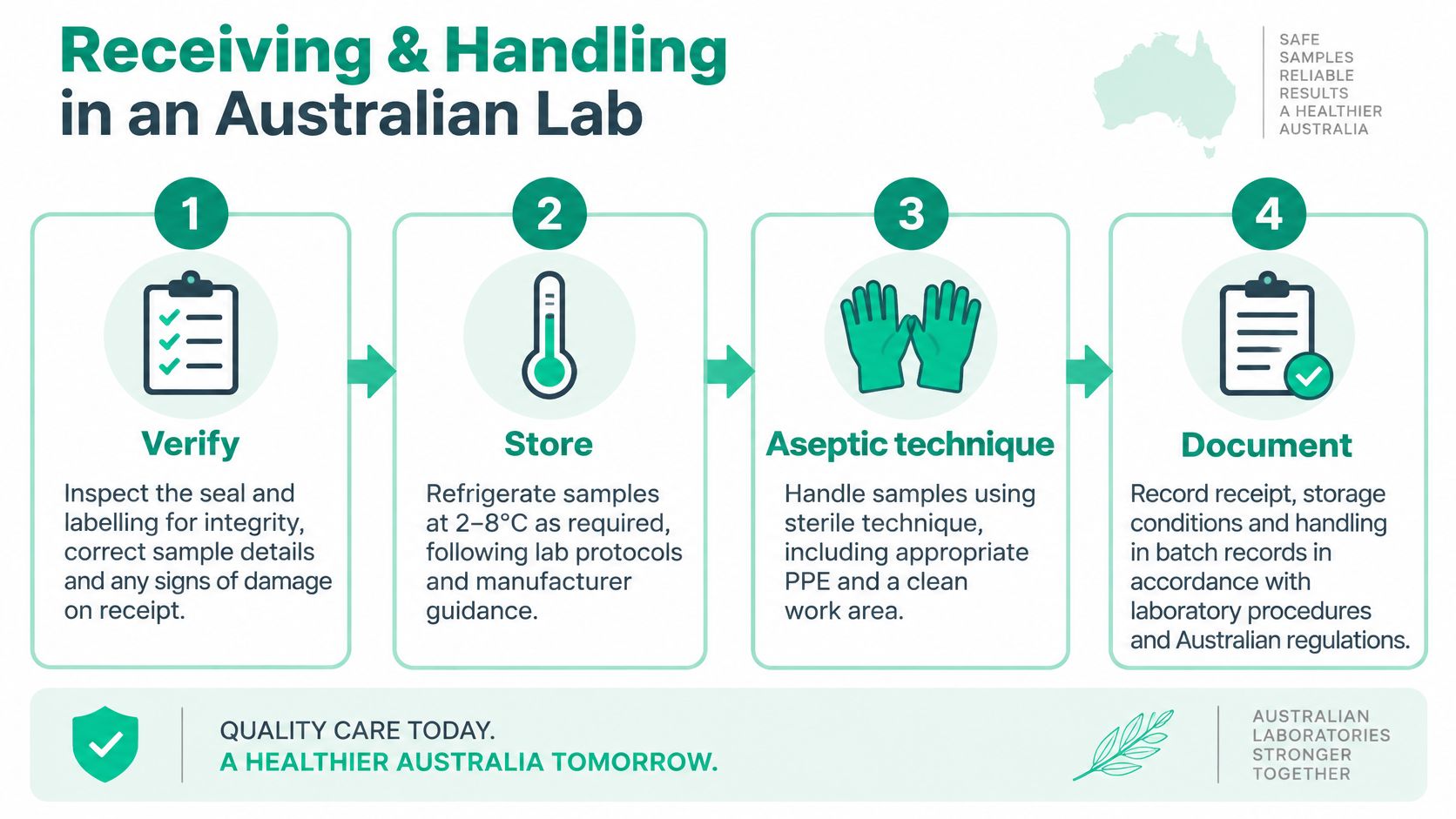
A practical laboratory procedure should also require stopper disinfection before each entry and allow the disinfectant to dry. Don't touch the stopper after cleaning, reuse syringes or pool leftovers from different vials. Record the opening date, operator and storage conditions so the team can apply its approved in-use period consistently.
NSW Health says multidose vials should generally be discarded within 28 days of first entry unless the manufacturer specifies otherwise, and immediately if sterility is in doubt or compromised. That's a general healthcare guideline, not permission to keep a research vial for that long regardless of its label, study risk assessment or storage evidence. Set a shorter internal period when your documentation doesn't support the general interval. For storage controls, align the written procedure with the product's stated requirements and your peptide storage and stability guidance.
A Worked Example of a Reconstitution Calculation
A calculation can illustrate concentration arithmetic, but it can't establish that a particular diluent is compatible with a particular compound or method. For that reason, don't use a generic example as a preparation protocol or as a basis for applying a product to people.
The relevant technical principle is that product identity, volume calculation and experimental compatibility are separate questions. Before any research preparation, the laboratory needs product-specific documentation and an approved method. If either is missing, stop and resolve the gap rather than borrowing a calculation from an unrelated product.
The Australian product information for trastuzumab illustrates why. The TGA register includes bacteriostatic water supplied with a registered trastuzumab presentation, while that product's information specifies a validated 20 mL reconstitution yielding approximately 21 mg/mL at about pH 6.0. Those values belong to that specific product and presentation. They aren't a transferable peptide protocol. (Sydney Children's Hospitals Network's reconstitution procedure)
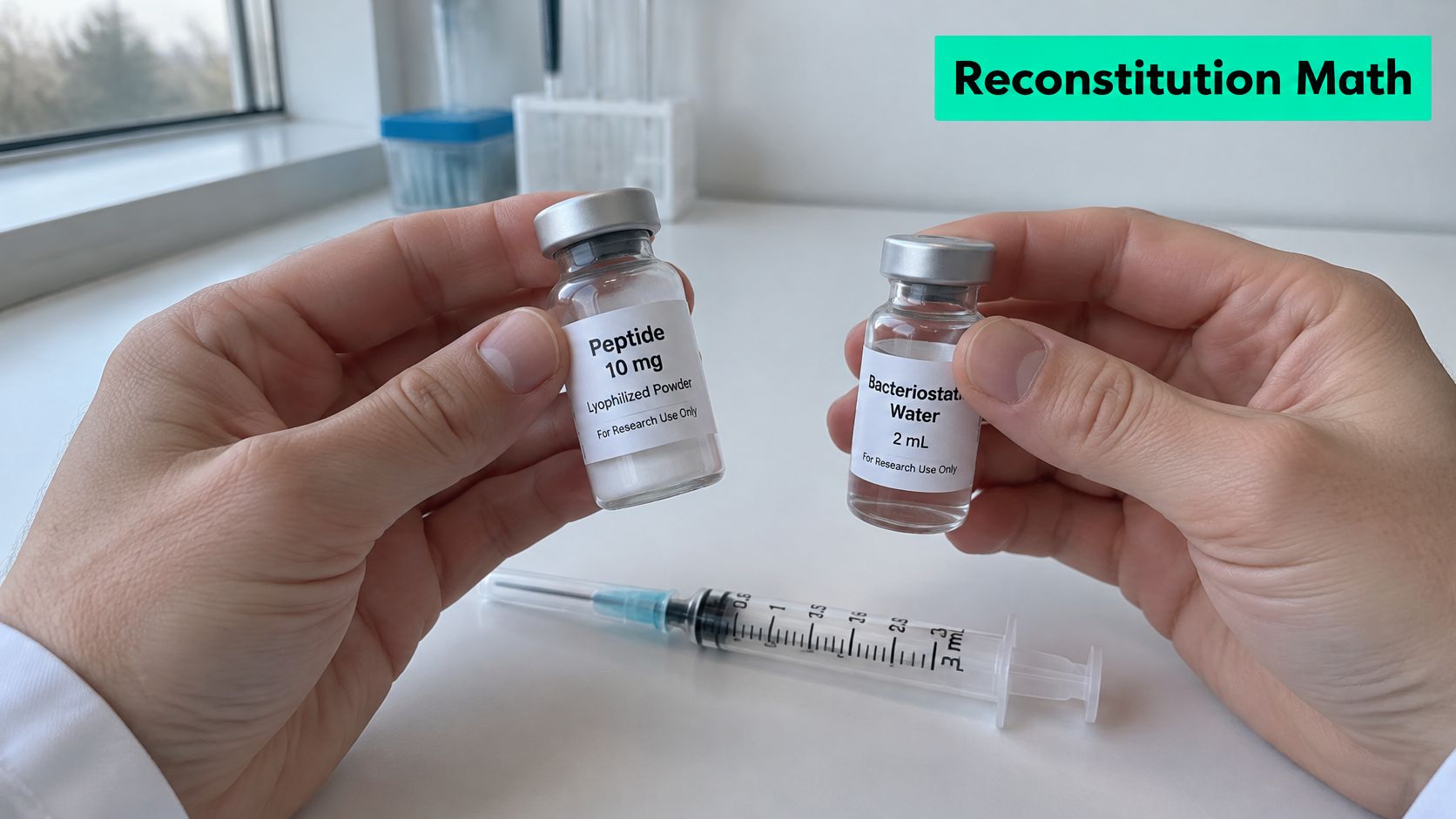
For research teams, the sensible takeaway is not to copy a volume from another compound's product information. Confirm the intended diluent and compatibility for the specific experimental method, and keep the approval and source documentation with the study records. A research peptide preparation guide can support general planning, but it doesn't replace product-specific validation or an approved laboratory procedure.
Procurement Risk and Supply Resilience for Australian Research
“Available today” doesn't guarantee continuity across a multi-week study. The TGA reported that an acute national shortage affecting several IV-fluid presentations began in 2024, linked to global supply limitations, unexpected demand increases and manufacturing issues. Overseas-registered alternatives were approved to support continuity, and the regulator later reported that overall supply had stabilised. That disruption involved products such as saline and Hartmann's solution, not proof of a bacteriostatic-water shortage. Its procurement lesson is broader: plan for upstream changes, not just current stock. (TGA information on IV-fluid shortages)
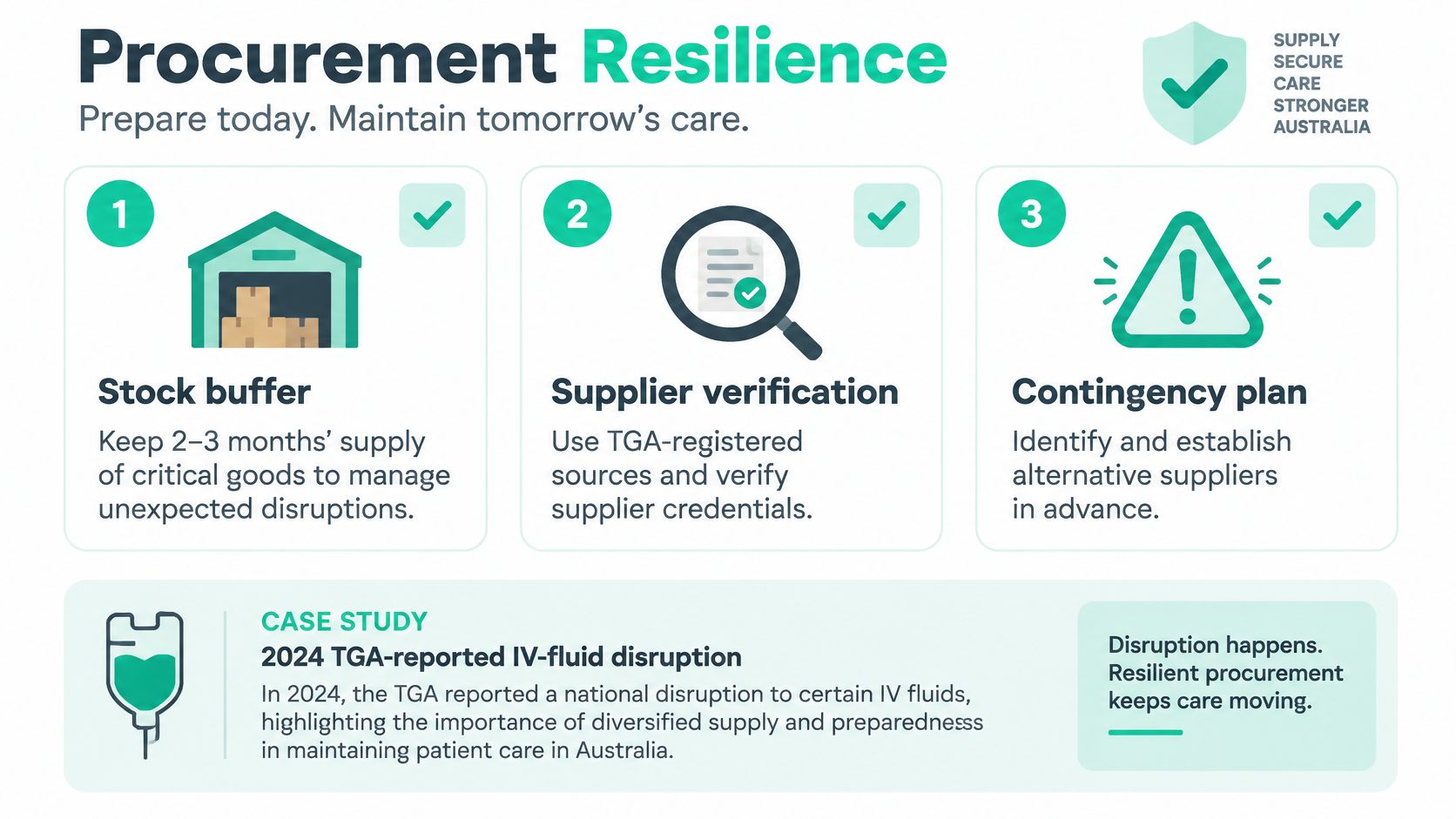
Before committing to a purchase, ask the supplier about remaining shelf life, dispatch location, replacement terms and what happens to documentation if a manufacturer, presentation or lot changes. Forecast study demand and set an approved contingency quantity based on your own storage capacity and research schedule. Don't assume a supplier's local processing removes upstream manufacturing risk.
A 10-pack format can simplify ordering, but it only improves traceability if the delivered vials and records identify their batches clearly. Confirm whether the pack comes from one lot or several, and retain the records for each. Bulk Aussie Peptides offers research supplies in 10-pack formats, with batch certificates available through its online lab library and linked on product pages, including an “in testing” status where results are pending. Its bulk research supply information is one option to review when planning a larger order.
A Buyer's Checklist and Common Questions for Australian Labs
Before checkout, put the supplier's claims beside the product documents. A clear record now makes later receiving checks and study reviews easier.
- Intended use: Confirm that the label clearly identifies the product's intended use and matches your research procurement requirements.
- Identity and formulation: Check the stated composition and preservative details.
- Traceability: Record the manufacturer, lot and expiry information, and request batch-specific documentation.
- Quality evidence: Confirm what sterility or other quality information is available, and whether a certificate of analysis is linked to the relevant batch.
- Supply terms: Verify dispatch location, remaining shelf life and replacement arrangements.
- Segregation: Store research materials separately from products intended for clinical administration.
The Australian medication-safety programme has also highlighted the value of reducing avoidable medication harm. A national status report estimated approximately 250,000 medication-related hospital admissions each year, with about two-thirds considered potentially preventable. These are population-level figures, not evidence about bacteriostatic water or peptide research. They reinforce why laboratories should keep research materials clearly identified and maintain batch-specific records. (The Australian Commission's medication-labelling standard)
What should we ask the supplier for?
Request the current specification, manufacturer identity, intended-use statement, lot and expiry details, and any batch-specific certificate or sterility information the supplier holds. Keep the documents with your purchasing records.
Could a preservative affect a research method?
It could be relevant to an assay or experimental system. Check the product's stated preservative and ask the method owner to assess compatibility before procurement; don't assume a diluent that suits one study will suit another.
Does overseas terminology establish Australian supply status?
No. Check the current Australian requirements and the exact formulation, presentation and claims. The Australian research peptide regulation guide is a starting point, not a substitute for checking the applicable rules for your organisation and product.
What records should we retain?
Keep the order, product specification, batch documentation, receiving inspection and any records required by your laboratory procedure. Make sure your files show which lot was received and where it was allocated.
Bulk Aussie Peptides is Australian owned and operated, with research-use-only supplies, sealed glass vials, batch documentation and independent lab certificates in its online lab library. Visit Bulk Aussie Peptides to review product specifications and documentation before making your next research procurement decision.
- BAP