
Semaglutide Australia Research Guide

What matters more in semaglutide Australia, the medicine's clinical status or the way a laboratory sources and documents it? For Australian researchers, the practical answer is that both matter, but they sit in different lanes. Semaglutide appears in Australia as a regulated therapeutic product and also as a research-use compound in laboratory procurement, and those two contexts must never be blurred.
Products are supplied strictly for laboratory research purposes only. They are not for human consumption, therapeutic use or diagnostic procedures.
For labs, universities, CROs and procurement teams, the core issue is not whether semaglutide exists in Australia. It is how to separate PBS-listed medicine pathways, TGA-approved therapeutic products, and research-only supply in a way that supports reproducibility, documentation, and institutional compliance. That distinction is especially important because clinical articles often focus on prescribing, while laboratory teams need batch paperwork, analytical confidence, and a clear procurement trail.
Table of Contents
- Navigating Semaglutide Research in Australia
- Regulatory and Import Considerations
- Selecting Bulk Pack Formats for Study Design
- Laboratory Reconstitution and Handling
- Supplier Evaluation and Documentation
- Frequently Asked Questions for Institutions
Navigating Semaglutide Research in Australia
The first question is simple, is this being handled as a medicine or as a research material? In practice, that distinction drives everything from paperwork to storage records. Semaglutide Australia is a useful search term, but it hides a major split between approved therapeutic use and laboratory procurement.
Clinical naming does not equal research access
In Australia, Ozempic is the semaglutide product associated with type 2 diabetes pathways, while Wegovy is the higher-dose obesity formulation. The Obesity Evidence Hub notes that six TGA-approved medicines are available for obesity in Australia, including semaglutide, but also states that no obesity medicines are subsidised on the PBS for weight management and that PBS semaglutide access remains limited to type 2 diabetes pathways rather than obesity treatment. Obesity Evidence Hub overview
That clinical reality matters to researchers because approval, reimbursement and laboratory supply are not the same thing. A compound can be central to therapy discussions and still be sourced, handled, and documented differently inside a research setting. The operational lesson is to keep procurement records tied to research objectives, not patient-facing language.
Practical rule: if the file will sit in a lab folder, it should read like a research procurement record, not a clinical prescribing note.
Keep the research boundary explicit
Laboratory teams should treat semaglutide as a compound for in-vitro work, analytical method development, and research modelling unless a protocol says otherwise. That means no therapeutic framing, no dosing guidance, and no assumptions that the clinical presentation automatically maps to research suitability. The research question should come first, then the documentation, then the material specification.
A good internal file usually answers three things straight away, what the project is testing, which product format is being purchased, and what evidence supports batch identity. If any of those are vague, the procurement decision is weak. For institutional users, that often creates avoidable delays later when ethics, biosafety, or purchasing teams ask for supporting detail.
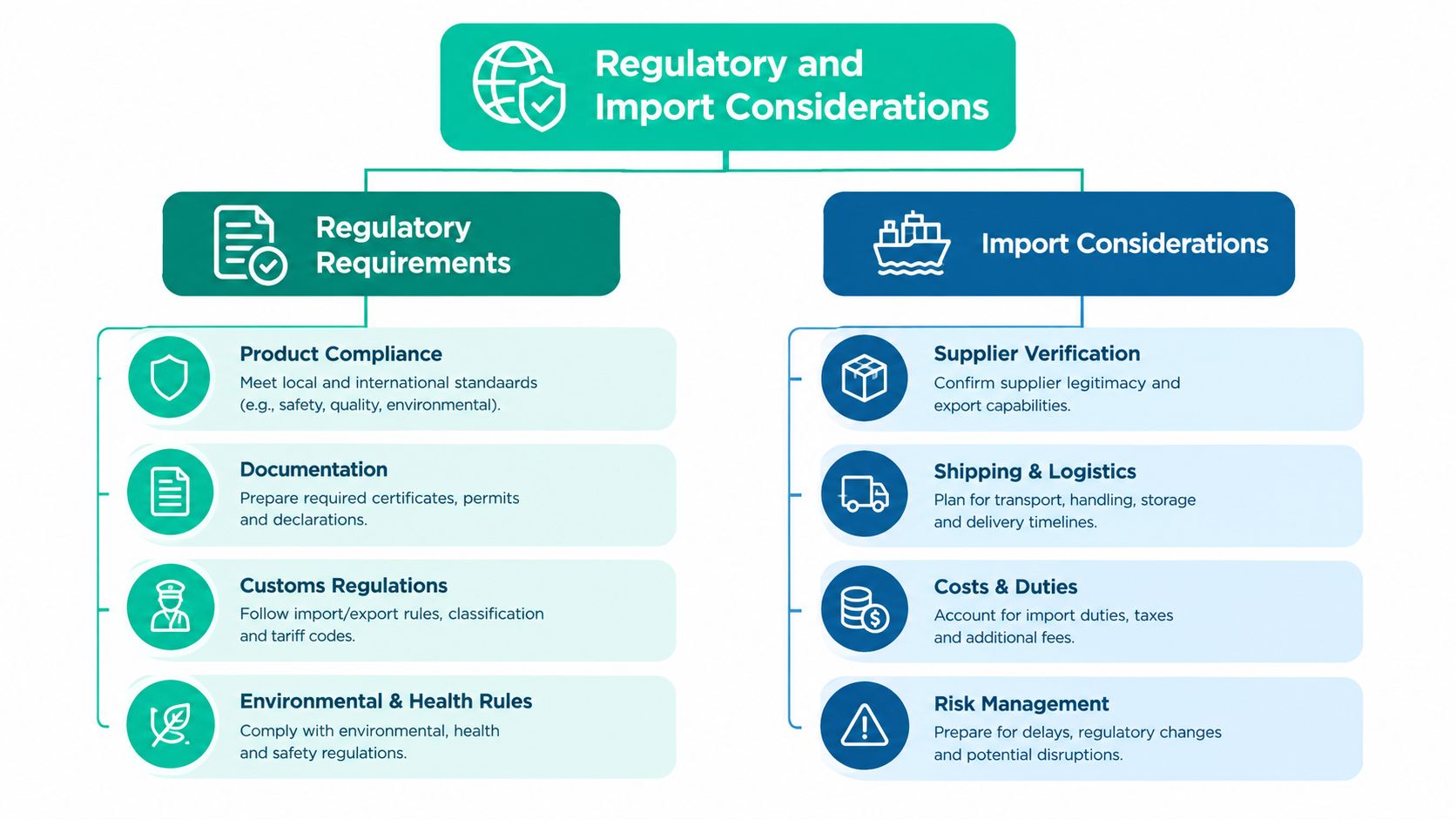
Regulatory and Import Considerations
Australian semaglutide supply is shaped by TGA approval, PBS reimbursement, and product-specific discontinuation issues. The TGA approved Ozempic for adults with insufficiently controlled type 2 diabetes on 15 August 2019, and semaglutide has been a PBS-listed medicine since 1 September 2021. In 2023, Australian PBS utilisation expanded sharply, with 1,989,952 semaglutide prescriptions supplied to 292,848 patients, and among 120,374 people starting semaglutide or dulaglutide, 94% (113,058) received semaglutide. PBS medicine status document
That does not mean research buyers can treat semaglutide like a standard PBS medicine. The PBS framework covers subsidised clinical access, while research procurement needs documentation that supports institutional oversight. The practical consequence is a market where clinical demand, supply management and laboratory sourcing can all be affected at once, even though they answer different questions.
What the paperwork usually needs to show
For research teams, the most useful documents are the ones that establish provenance and intended use clearly. The key point is not to overload a file with irrelevant paperwork, but to make sure the record supports an audit trail.
Typical procurement reviews look for:
- Product identity, matching the ordered compound to the received material.
- Batch-specific documentation, so a single lot can be traced through storage and use.
- Clear research-only positioning, which keeps the file distinct from clinical supply.
- Independent testing evidence, when available, because manufacturer documents alone don't answer every quality question.
The PBS review on obesity treatments also states that semaglutide for obesity management is not PBS-subsidised, while Ozempic remains PBS-listed for type 2 diabetes. It also notes that, as of February 2026, there were no shortages of GLP-1 medicines in Australia. PBAC advice on equitable access to GLP-1 obesity treatments
For research import decisions, that matters less as a prescribing point and more as a supply signal. A product that is widely discussed clinically often attracts procurement pressure, and that pressure can affect how laboratories plan lead times, stock levels and substitution risk.
For a practical policy framework, review research peptide regulation in Australia alongside your institution's internal import rules.
Selecting Bulk Pack Formats for Study Design
Pack choice should follow the assay, not the other way round. For semaglutide research, the useful comparison is between a 5 mg × 10 format and a 10 mg × 10 format, because each fits a different workflow.
Matching vial size to the assay
The 5 mg × 10 format suits low-volume in-vitro work and receptor-binding assays where you want to minimise the amount of reconstituted material sitting in active rotation. That matters because reconstituted peptide solutions have a finite working life compared with dry lyophilised powder, so smaller batches can reduce waste across long projects.
The 10 mg × 10 format fits continuous or high-throughput screening work better. A 10 mg vial reconstituted with 2.0 mL or 2.5 mL of diluent gives a stock concentration of 4.0 mg/mL to 5.0 mg/mL, which is useful when serial dilutions must stay tidy across repeated plates or comparative metabolic studies.
Operational takeaway: choose the vial size that matches how often you'll open, dilute and discard working stock.
Semaglutide Bulk Pack Comparison
| Pack Configuration | Optimal Use Case | Key Advantage |
|---|---|---|
| 5 mg × 10 | Low-volume in-vitro and receptor-binding assays | Smaller working batches, less waste risk |
| 10 mg × 10 | High-throughput screening and comparative metabolic studies | Higher-concentration stock for serial dilution workflows |
The advantage of either format is not hype, it's lot consistency. Ten lot-matched vials from one synthesis batch help reduce unnecessary variation across a project timeline. That is particularly useful when a study spans multiple runs, multiple operators, or multiple analysis points.
The right question is not which pack is “better”. It is which pack keeps the study design clean, the handling simple, and the documentation consistent.
Laboratory Reconstitution and Handling
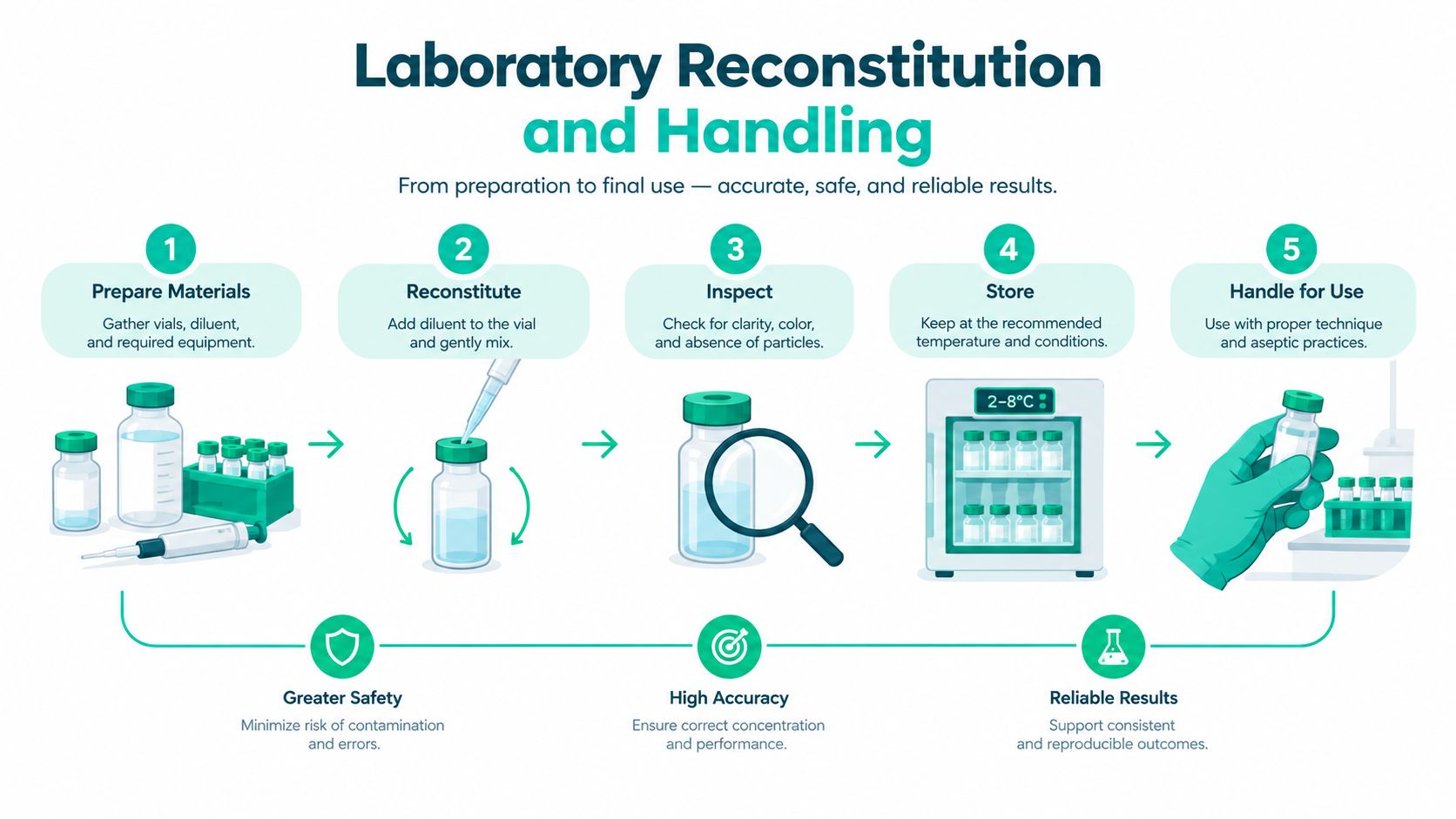
Reconstitution should be treated as a calculation problem first and a handling task second. The point is to preserve analytical consistency, not to mimic clinical use. For semaglutide, that means working gently and keeping the math explicit.
Stock concentration and clean handling
Using a 5 mg vial with 2.0 mL of diluent gives a stock concentration of 2.5 mg/mL, or 2,500 µg/mL. At that concentration, a 10-unit aliquot on a U-100 micro-syringe delivers 250 µg. That calculation belongs in the lab record, because it removes guesswork when different staff members prepare aliquots.
The process itself is straightforward:
- Let the lyophilised vial reach room temperature under a laminar flow hood.
- Swab the septum with an alcohol wipe.
- Draw up exactly 2.0 mL of diluent.
- Aim the needle at the inner wall so the solvent runs down slowly.
- Swirl gently until dissolved, without shaking or vortexing.
The reason for the slow addition is simple, mechanical agitation can damage delicate peptide structures. Semaglutide has a 31-amino-acid backbone and a fatty acid side chain, so handling should stay deliberate and low stress.
Storage discipline matters
Reconstituted solutions are kept refrigerated at 2°C to 8°C for active in-vitro work, while unopened vials from the bulk pack remain frozen at -20°C. Those temperatures are part of the handling record, not a suggestion to improvise around them. Once a vial is in use, the person preparing it should document the dilution volume, the calculated concentration and the storage location.
For a stepwise lab reference, see reconstituting research peptides. The most common error I see in shared laboratory environments is not the math itself, but inconsistent transcription of the final concentration into notebooks, freezer labels and sample sheets.
Supplier Evaluation and Documentation
A semaglutide supplier should be judged on identity, purity and provenance. If one of those three is missing, the procurement file is weaker than it looks. That is where documentation matters more than marketing language.
Three checkpoints that actually help
First, look for purity verification through analytical RP-HPLC. Independent chromatograms are useful because they show whether the material is clean enough for reproducible work, rather than assuming the batch matches a label.
Second, check sequence identity by mass spectrometry. If the measured molecular weight lines up with the theoretical compound, that gives the lab a better basis for confidence than a generic specification sheet.
Third, ask whether the documentation is manufacturer-provided or independent. Those are not the same thing, and they shouldn't be treated as interchangeable. Independent reports are more valuable when the project depends on reproducibility across multiple operators or sites.
Practical rule: if the batch file can't survive a procurement review, it won't survive an ethics or QA review either.
The supplier should also make provenance readable. Lot numbers, batch references and linked documents should be easy to match without chasing email threads. That's especially useful for institutions that need to archive evidence for later method validation or repeat ordering.
For a supplier checklist that fits Australian research buying, review research peptide supplier guidance. One option in this market is Bulk Aussie Peptides, which publishes product specifications and batch documentation for its research-use-only range, including semaglutide, so procurement teams can review paperwork before purchase.
What strong documentation does, and doesn't do
Strong paperwork improves confidence, but it doesn't prove every future vial in every shipment will be identical. A single report supports the specific lot it covers. That's why batch-level review matters and why generic promises should be treated cautiously.
A clean documentation package should let a lab answer three questions without delay, what the product is, which batch was received, and what evidence supports its inclusion in the study. If the supplier can't help with that, the project will spend more time resolving procurement gaps than running assays.
Frequently Asked Questions for Institutions
Is semaglutide in Australia mainly a clinical product or a research compound?
Both contexts exist, but they serve different purposes. Clinically, semaglutide sits inside PBS and TGA frameworks. In research, it should be handled as a laboratory material with batch documentation and clear intended use.
Why do laboratories prefer 10-pack formats?
They simplify planning. A 10-pack gives procurement teams predictable lot structure and helps reduce variation when several experiments draw from the same synthesis batch.
What should a procurement team check before ordering?
Match the product name to the study design, confirm the documentation type, and verify whether batch-specific evidence is available. Those checks matter more than glossy product language.
What matters most after delivery?
Immediate reconciliation of the received vial count, lot details and storage records. If that information isn't captured on arrival, later traceability gets messy fast.
Can a research team rely on the clinical conversation around Ozempic or Wegovy?
Only as background context. The lab still needs its own documentation, its own storage discipline and its own verification trail.
Bulk Aussie Peptides supplies research-use-only semaglutide in standardised bulk formats with product specifications and batch documentation for Australian laboratories. If you're planning a semaglutide project and need a clearer procurement trail, visit Bulk Aussie Peptides to review the available research catalogue and supporting documentation.