
Tesamorelin Australia: Research, Regulation and Lab Sourcing
The most popular advice about tesamorelin in Australia tends to begin with availability, delivery speed or advertised vial formats. That order of priorities is backwards for a laboratory. The first question is whether the compound is registered on the Australian Register of Therapeutic Goods, what the supplier is offering, and whether the provenance and documentation support the proposed research use.
Tesamorelin is a stabilised growth-hormone-releasing hormone analogue studied overseas in the context of HIV-associated lipodystrophy. Australian regulatory summaries indicate that it isn't registered on the ARTG, so an Australian laboratory shouldn't treat an online listing, domestic dispatch location or certificate of analysis as evidence of therapeutic approval. The procurement decision turns on ARTG status, intended use, chain of custody and batch-specific records.
Table of Contents
- Why Tesamorelin in Australia Is a Regulatory Question First
- What Tesamorelin Is and Where the Research Sits
- Australian Regulatory Status Under the TGA and ARTG
- Procurement Implications for Australian Laboratories
- Documentation a Researcher Should Expect to See
- Reading COAs and Independent Testing Claims Carefully
- Laboratory Handling, Storage and Reconstitution Mathematics
- Pre-Purchase Checklist and Research-Use Reminder
Why Tesamorelin in Australia Is a Regulatory Question First
For an Australian researcher, tesamorelin isn't primarily a courier problem. It's a classification and governance problem. Independent Australian regulatory summaries state that tesamorelin isn't currently registered on the ARTG, meaning there's no approved tesamorelin product routinely marketed in Australia through ordinary therapeutic-goods channels. Those summaries describe access, where available through a doctor, as potentially involving unapproved-medicine pathways such as the Special Access Scheme or Authorised Prescriber framework. (Australian tesamorelin regulatory overview)
That distinction matters because “available in Australia” can describe several different things. It might refer to a research-use material held by an Australian supplier, a product dispatched domestically, or an unapproved medicine accessed through a clinician-managed pathway. None of those descriptions, by themselves, establishes that the product is TGA-approved or suitable for human use.
Practical rule: Treat marketing availability and regulatory approval as separate data fields in every procurement record.
A laboratory should define the intended use before requesting a quote or placing an order. Research-only handling, in-vitro work and analytical investigation require a different documentation trail from clinical supply. A human-use proposal may also trigger institutional ethics, prescribing and unapproved-goods considerations that a laboratory-only study does not resolve just by using a domestic supplier.
The appropriate technical control point is the TGA's ARTG search guidance. The ARTG is the public reference database for therapeutic goods, so researchers should search for the specific substance and product representation rather than relying on a retailer's wording. If the relevant product isn't listed, the procurement file should record that result and explain why the proposed supply route remains within the institution's approved research framework.
Products are supplied strictly for laboratory research purposes only. They are not for human consumption, therapeutic use or diagnostic procedures.
What Tesamorelin Is and Where the Research Sits
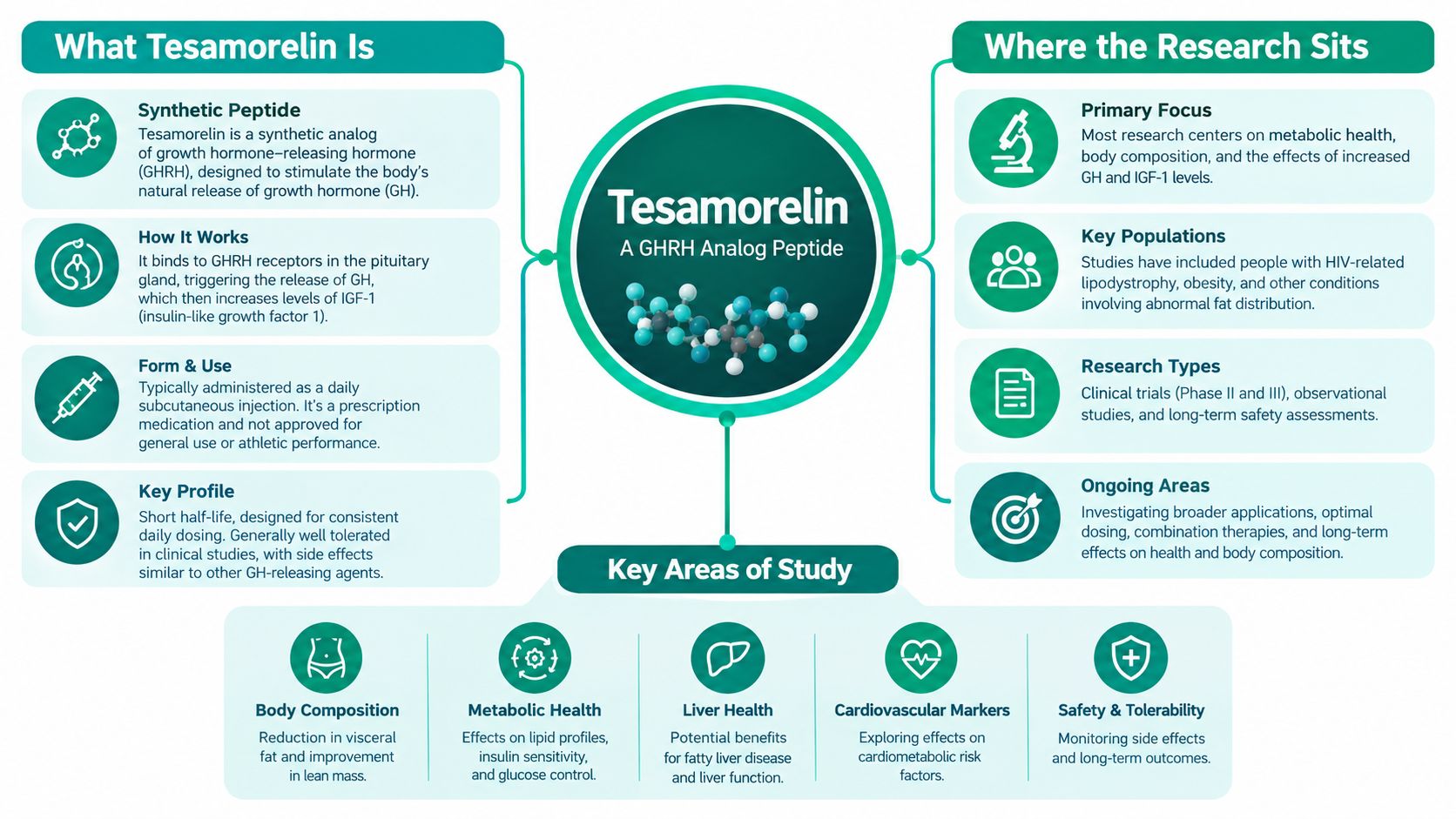
Tesamorelin is a synthetic, stabilised analogue of growth hormone-releasing hormone, or GHRH. Its research identity is therefore different from that of compounds that act through other growth hormone secretagogue pathways. The compound has been investigated in HIV-associated lipodystrophy and related metabolic research, while PubMed-indexed literature also describes tesamorelin in NAFLD-related contexts. (PubMed-indexed tesamorelin literature)
That background shouldn't be translated into a broad weight-management claim. The strongest established clinical context is visceral adipose tissue research in HIV-associated lipodystrophy, not general obesity treatment. For Australian laboratories, that distinction determines how a protocol should describe the compound, what population or model it examines, and which conclusions it can reasonably draw.
At a mechanistic level, researchers study tesamorelin as a GHRH analogue that engages the growth-hormone-releasing pathway. It shouldn't be grouped casually with every peptide marketed online for body-composition research. A laboratory report should identify the compound by its chemical and research context, then specify whether the work is in-vitro, preclinical or human research. The fact that a compound has a clinical evidence base in one jurisdiction doesn't make every other research question clinically validated.
The evidence boundary researchers should preserve
Clinical research sources describe a 2 mg daily subcutaneous protocol in tesamorelin Phase 3 studies. That detail can help researchers compare published protocols, but it isn't a dosing recommendation for Australian use and shouldn't be copied into a laboratory product page as administration guidance. (Phase 3 protocol detail)
A sound research summary should therefore separate three statements:
- Identity: tesamorelin is a stabilised GHRH analogue.
- Research context: it has been studied in HIV-associated lipodystrophy and NAFLD-related settings.
- Regulatory scope: it isn't registered on the Australian ARTG according to the available Australian regulatory summaries.
That separation prevents a common procurement error, where overseas clinical evidence is treated as proof of Australian approval or as support for an unrelated use case.
Australian Regulatory Status Under the TGA and ARTG
Australian researchers should avoid describing tesamorelin as an approved Australian medicine. The available Australia-focused regulatory information indicates that tesamorelin isn't registered on the ARTG and isn't approved by the TGA for therapeutic use in Australia. The practical result is that ordinary pharmacy or hospital medicine procurement shouldn't be assumed.
The ARTG search is important because it tests the status of the actual therapeutic good, not merely the active ingredient's reputation overseas. A US or Canadian approval may establish that regulators in those jurisdictions assessed a particular product and indication. It doesn't automatically place an Australian product on the ARTG, and it doesn't remove Australian import, supply or institutional governance requirements.
| Jurisdiction | Approval status | Registering body | Key implication for Australian research |
|---|---|---|---|
| Australia | Australian-focused summaries indicate tesamorelin isn't registered on the ARTG | Therapeutic Goods Administration | Plan for research-only handling or an applicable unapproved-goods pathway, not routine therapeutic stock |
| United States | Tesamorelin has an approved therapeutic context for HIV-associated lipodystrophy | US Food and Drug Administration | Overseas approval provides research context, but it doesn't establish Australian registration |
| Canada | Australian regulatory summaries identify tesamorelin as approved in Canada for HIV-associated lipodystrophy | Health Canada | Canadian status doesn't substitute for an Australian ARTG entry |
| Research supply | A research-use listing isn't the same as a registered therapeutic good | Supplier and institutional governance systems | Verify intended use, labelling, provenance and records before procurement |
For a laboratory, the distinction between registered medicine and research-use material affects the whole supply chain. It changes the documents requested from a supplier, the way the material is labelled internally, and the approvals required by a university, CRO or hospital. It can also affect border classification and the information customs or institutional purchasing teams need to review.
Before procurement, confirm the sponsor or supplier identity, the intended-use statement and the product's batch documentation. Ask how the shipment is classified at the border and whether any state-level controls or controlled-substance analogues might apply to the proposed work. These checks should happen before an order is placed, not after a parcel arrives.
Researchers can also consult this Australian research peptide regulation guide as a supplementary procurement reference. It shouldn't replace the ARTG search, institutional review or advice from the relevant Australian authorities.
Procurement Implications for Australian Laboratories
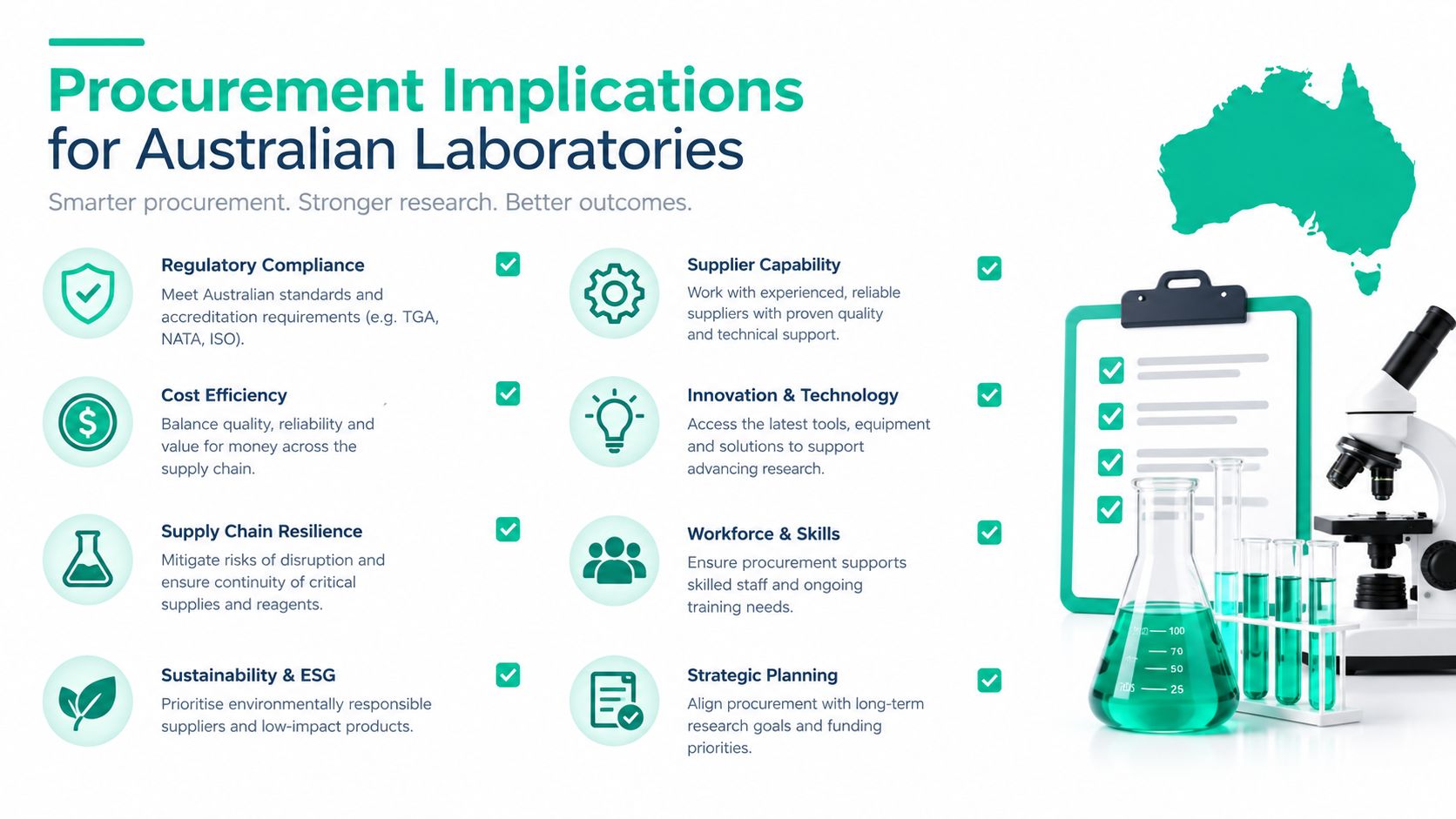
ARTG non-registration changes the procurement model. A laboratory should expect tesamorelin to move through a research-use supply chain, rather than assume it can be ordered in the same way as an approved medicine held in a hospital wholesaler's inventory.
That affects accountability. The principal investigator, laboratory manager or named end user should be identifiable in the purchase record, and the material should remain segregated from clinical stock. An institution may also need a study protocol, ethics or biosafety review where applicable, a defined storage location and a record of who can access the vial.
Build the chain of custody before ordering
A useful internal file should connect the material from supplier to bench. At minimum, retain:
- Supplier identity: Record the legal business details, contact point and stated supply role.
- Batch traceability: Match the vial or package lot number to the supplied certificate and purchase record.
- Quantity received: Record the number of vials or units, rather than relying only on the invoice description.
- Storage location: Identify the laboratory refrigerator, freezer or controlled research store used after receipt.
- Intended study: Link the material to the approved project, assay or analytical purpose.
- Arrival condition: Note packaging, temperature-control materials, vial integrity and any discrepancy.
Domestic processing may reduce some administrative friction compared with an overseas drop-shipment, but local dispatch doesn't convert an unregistered material into an approved therapeutic good. An Australian business entity, traceable batch labelling and a clear research-use statement can improve the audit trail, yet the institution still needs to make its own regulatory and governance assessment.
The procurement information pack can be used as one document source when a purchasing team needs to assemble supplier, batch and intended-use information. It should sit alongside the institution's own approvals, not replace them.
Documentation a Researcher Should Expect to See
A credible research supply file should let a reviewer answer a simple question: does the document describe the exact material and lot that arrived? Generic marketing language isn't enough. The file should connect the product identity, physical presentation, analytical results, storage information and supplier contact details.
A specification sheet should identify the peptide and its stated form, such as lyophilised material, and should provide the information needed to compare the material with the laboratory's protocol. Where the supplier states a peptide sequence, molecular weight, counter-ion or purity, those fields should be clearly labelled as specifications or test results. A specification isn't automatically an independent confirmation.
The certificate of analysis should carry a batch or lot number that matches the vial. Researchers should look for the analytical method, reported result, date of testing and named analyst or signatory. If chromatograms or retention-time information are supplied, they should be attributable to the identified sample rather than presented as an unrelated example.
| Document | What it confirms | What to check |
|---|---|---|
| Product specification sheet | The supplier's stated identity, form and declared product attributes | Check whether each field is a specification, a test result or an unverified description |
| Batch or lot record | The connection between the vial and the supply file | Confirm that the number matches the vial, outer packaging and CoA |
| Certificate of Analysis | Reported analytical results for an identified sample or lot | Check method, date, result, signatory and whether the testing source is disclosed |
| Safety Data Sheet | Laboratory safety and handling information | Confirm that the document is appropriate to the material and current supply |
| Research-use-only label | The stated boundary of the material's intended use | Ensure the label and invoice don't imply therapeutic or diagnostic use |
| Shipping and storage record | Conditions and instructions relevant to receipt and retention | Check storage requirements, expiry information and any transit instructions |
Australian procurement teams should also check the supplier's Australian Business Number details, local query and return contacts, and consistency between the invoice, vial label and batch documentation. These details don't prove purity or regulatory approval, but they make the provenance record more complete.
A missing document isn't proof that the material is unsuitable. It is a question that should be resolved before the material enters an approved study. Record the answer rather than relying on a verbal assurance.
Reading COAs and Independent Testing Claims Carefully
A manufacturer-issued CoA and an independent laboratory report answer related but different questions. A manufacturer CoA usually records the supplier's own release testing for an identified lot. An independent report may provide an external assessment, but only if the laboratory, method, sample identity and result are clearly documented.
HPLC purity generally describes the proportion of detected chromatographic material assigned to the principal peak under the stated method. It doesn't, by itself, establish sterility, endotoxin status, identity, stability or suitability for human use. Mass spectrometry can support identity confirmation by comparing the measured mass with the expected material, while microbial or endotoxin panels address different analytical questions. Research-use CoAs may focus on identity and chemical purity rather than sterility.
| Aspect | Manufacturer CoA | Independent third-party report |
|---|---|---|
| Issuing party | The manufacturer or supplier | A separately identified testing laboratory |
| Primary purpose | Release or describe a supplier-held lot | Provide an external test result for the submitted sample |
| Lot connection | Should match the supplied vial or batch | Must state which sample or lot was tested |
| Method detail | May identify HPLC, mass spectrometry or another method | Should identify the method and relevant conditions where available |
| Independence | Not independent of the supplying organisation | Independence depends on the laboratory relationship and sample chain |
| What it proves | Only the parameters reported for that sample | Only the parameters reported for that submitted sample |
Phrases such as “greater than 98% purity” or “identity confirmed by mass spectrometry” need context. Ask whether the result applies to the finished product, an in-process sample or a reference material. Ask who performed the test, whether the report is attached as a complete PDF, and whether the date and lot number match the received material.
The CoA library can help researchers locate available batch records, but a manufacturer-provided document shouldn't be presented as equivalent to independent testing. A practical review sequence is to identify the lot, method, result, date and testing laboratory. If one is absent, flag it for clarification.
Laboratory Handling, Storage and Reconstitution Mathematics
Laboratory handling should begin with the vial label, CoA and supplier instructions, not with a generic internet protocol. Lyophilised tesamorelin is handled as a powder until a laboratory prepares a solution for an approved research method. The researcher should verify the stated peptide mass, form, expiry information and compatible diluent before opening the vial.
For neutral concentration calculations, use:
concentration = peptide mass ÷ final liquid volume
For example, if a verified record states a peptide mass of 10 mg and the laboratory's method specifies a final volume of 2 mL, the calculated concentration is 5 mg/mL. That is a laboratory maths example only. It isn't a dose, administration instruction or recommendation for human or veterinary use.
A lab should also account for stated overfill or fill-volume information where supplied. The mass printed on a label and the actual recovered amount may not be interchangeable assumptions. If the study depends on an exact concentration, document the calculation, the source mass, the final volume and any uncertainty before the solution is used.
Storage decisions should be documented
Unopened lyophilised material is commonly supplied with refrigerated storage instructions, often expressed as 2–8°C, light protection and moisture protection. Those conditions must be confirmed against the specific supplier's documentation rather than assumed from another peptide. Retain the original packaging and any desiccant where the instructions require it.
Reconstituted material may have different storage and holding requirements. Some laboratory documentation specifies refrigerated short-term holding and colder storage for longer retention, while cautioning against frost-free freezers and repeated freeze-thaw cycles. The governing value is the validated instruction attached to the actual material and study.
| Vial state | Temperature | Light and moisture | Typical hold |
|---|---|---|---|
| Sealed lyophilised vial | Confirm the supplier's stated refrigerated range, such as 2–8°C | Keep in original packaging and protect from light and moisture | Follow the documented expiry or retest information |
| Opened or prepared material | Confirm the validated post-opening condition | Use the handling controls specified by the laboratory method | Record preparation date and assigned hold time |
| Reconstituted working stock | Use the study or supplier's documented condition | Protect from avoidable light exposure and contamination | Use the laboratory's approved short-term stability period |
| Aliquoted research stock | Confirm whether colder storage is validated | Minimise repeated temperature cycling | Assign each aliquot a label, date and disposition |
A working-stock and aliquot plan can reduce repeated freeze-thaw exposure, but it must be approved by the laboratory's method owner. Reconstitution should remain a controlled laboratory operation involving the specified sterile diluent, documented calculations and appropriate aseptic technique. No part of this guidance addresses injection, administration or treatment.
Pre-Purchase Checklist and Research-Use Reminder
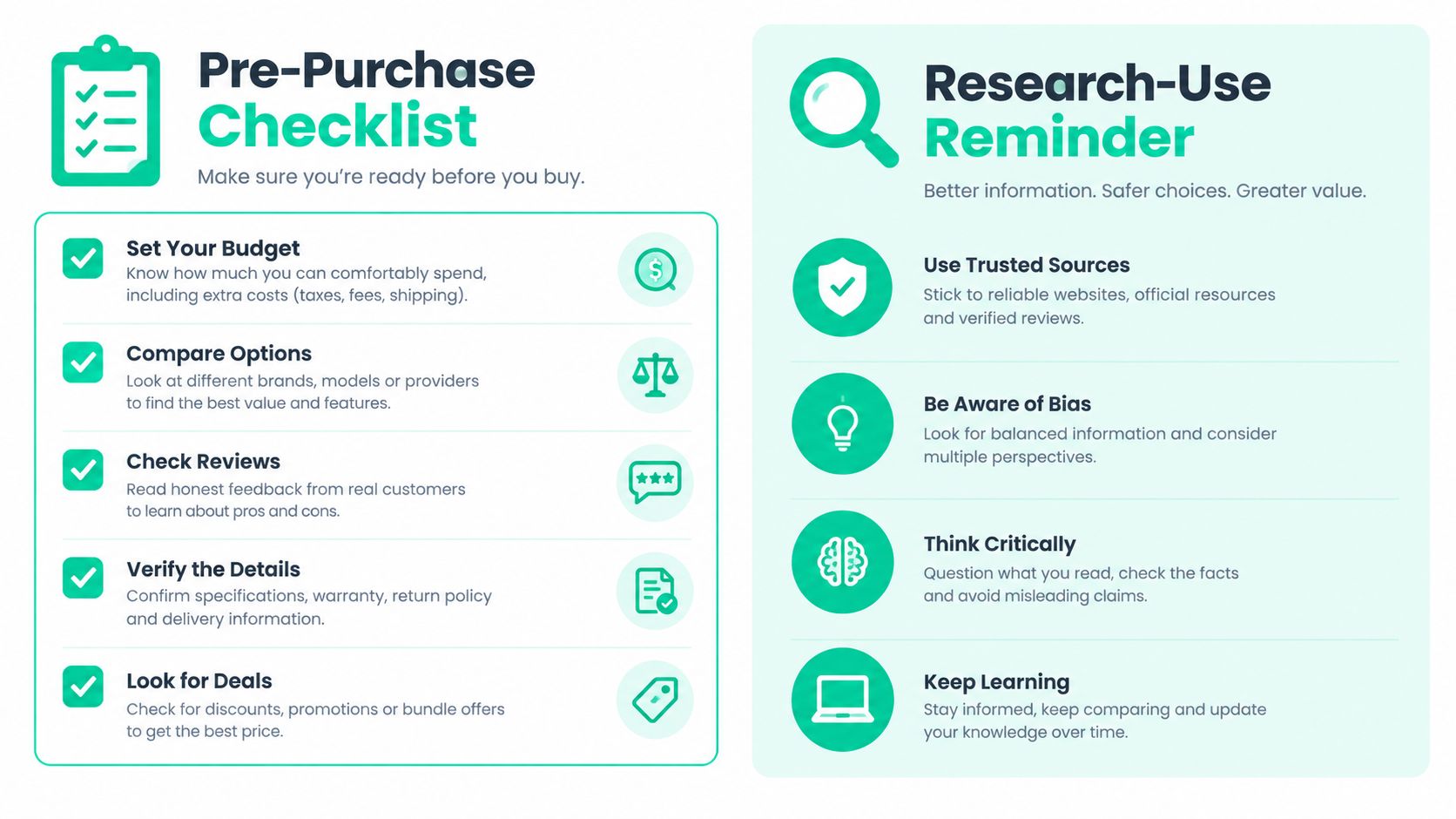
A pre-purchase review should produce a decision record, not just a shopping cart. Start with the ARTG search and record the result for the exact tesamorelin product representation. Australian summaries indicate that tesamorelin isn't currently registered on the ARTG, so the file should explain why the proposed research-use pathway is appropriate and who has approved it internally.
Use the following checks before ordering:
- Confirm the research question. State whether the material supports in-vitro, analytical, preclinical or another approved research activity. Remove any therapeutic, diagnostic or human-use wording from the study description unless the institution has separately addressed the relevant pathway.
- Match the documentation. Require the CoA, HPLC or mass-spectrometry information where available, specification sheet and safety documentation to identify the same batch number printed on the vial.
- Check the shipment record. The peptide name, quantity, research-use labelling and supplier identity should be consistent across the quote, invoice, packaging and receiving record.
- Establish dispatch provenance. Confirm whether the parcel is processed domestically or sent through an overseas route. Domestic dispatch may reduce customs exposure, but it doesn't establish ARTG registration.
- Review the pack format. If a supplier offers a 10-pack format, record the per-vial quantity, total units and lot structure rather than evaluating the pack solely on price.
- Plan receipt and storage. Confirm the expected packaging, cold-chain materials where applicable, moisture protection, desiccant instructions and the process for reporting damage or discrepancies.
- Assign accountability. Name the principal investigator, receiving staff member, storage location and study reference before the order is placed.
- Escalate uncertainties. Ask the supplier for missing lot records, test-method details or Australian contact information. Refer unresolved regulatory questions to the institution's compliance, ethics, biosafety or procurement team.
The central conclusion is straightforward. Tesamorelin Australia procurement should be judged by regulatory position and provenance before convenience. A fast dispatch, local business address or attractive pack format can support logistics, but none replaces an ARTG check, batch-specific documentation or institutional approval.
Products are supplied strictly for laboratory research purposes only. They are not for human consumption, therapeutic use or diagnostic procedures. Human and veterinary application falls outside this article, and researchers remain responsible for institutional ethics, biosafety classification, storage controls and any state-level requirements that may apply to their work.
Bulk Aussie Peptides supplies research-use-only peptides, including bulk vial formats, product specifications and batch documentation intended to support laboratory procurement and verification. Visit Bulk Aussie Peptides to review the available research catalogue and documentation before discussing a tesamorelin purchase with your institution.